Commercial cleaning and food hygiene professionals in Brampton assist food establishments, commissaries, baking facilities, warehouses, and food service operations maintaining standards. They sanitize regularly touched surfaces, food contact areas, equipment, floors, drains, restrooms, and prep zones with approved chemicals, maintaining proper ratios, and documenting contact times. You need regular sanitation determined by hazard level, food throughput, food allergies, and inspections, plus verification records that support Hazard Analysis Critical Control Points, audits, and regulatory adherence. The sections below outlines what strong sanitation programs should include.
Main Points
- Sanitation technicians from Brampton service restaurants, grocery departments, commissaries, warehouses, bakeries, schools, mobile vendors, and allergen-sensitive operations.
- Frequently contacted areas, food-contact equipment, kitchens, floors, drains, restrooms, and storage areas are treated using compartmentalized approaches to eliminate cross-contamination.
- Proper chemical concentration, suitability, and exposure duration are confirmed by trained providers, with completion logged via samples, inspections, and correction logs.
- Routine, regular, and cyclical duties allocated by zone form cleaning plans founded on risk, throughput, transitions, spills, and requirements.
- Choose suppliers with hazard analysis knowledge, health regulatory, competency, safety training, instruction, insurance, testimonials, color-categorized equipment, and compliance-ready cleaning paperwork.
Brampton Operations That Need Food Safety Cleaning: Which Ones?
Food safety cleaning is essential for any Brampton facility that processes, stores, prepares, packages, or serves food. Apply it to your operation if it falls within public health review, food regulations, or HACCP protocols. This includes restaurants, cafeterias, commissaries, grocery food departments, butcher shops, seafood counters, convenience stores, and institutional kitchens.
You'll furthermore need adherent sanitation standards in warehouses, food manufacturing plants, cold storage sites, retail bakeries, school nutrition programs, banquet halls, and meal delivery hubs. Mobile and temporary businesses are included, such as catering trucks, festival vendors, and pop-up food booths. When your staff handle raw materials, divide prepared dishes, warm finished meals, or maintain allergen storage, your location requires recorded sanitation procedures. In Brampton, sanitation is necessary; it comprises legal, operational, and consumer protection compliance.
Which Areas Do Brampton Cleaning Experts Cover?
You need professional cleaners who sanitize high-touch surfaces, kitchens, floor surfaces, and restrooms to comply with food safety and health regulations. They focus on these spaces because they pose the greatest danger for contamination spread, slipping risks, and hygiene violations.
When you know their cleaning scope, you can ensure your operation's cleaning procedures satisfy compliance and operational standards.
Cleaning High-Touch Areas
establish a sterilization schedule
check that sterilization has effective
Kitchens, Floors, and Restrooms
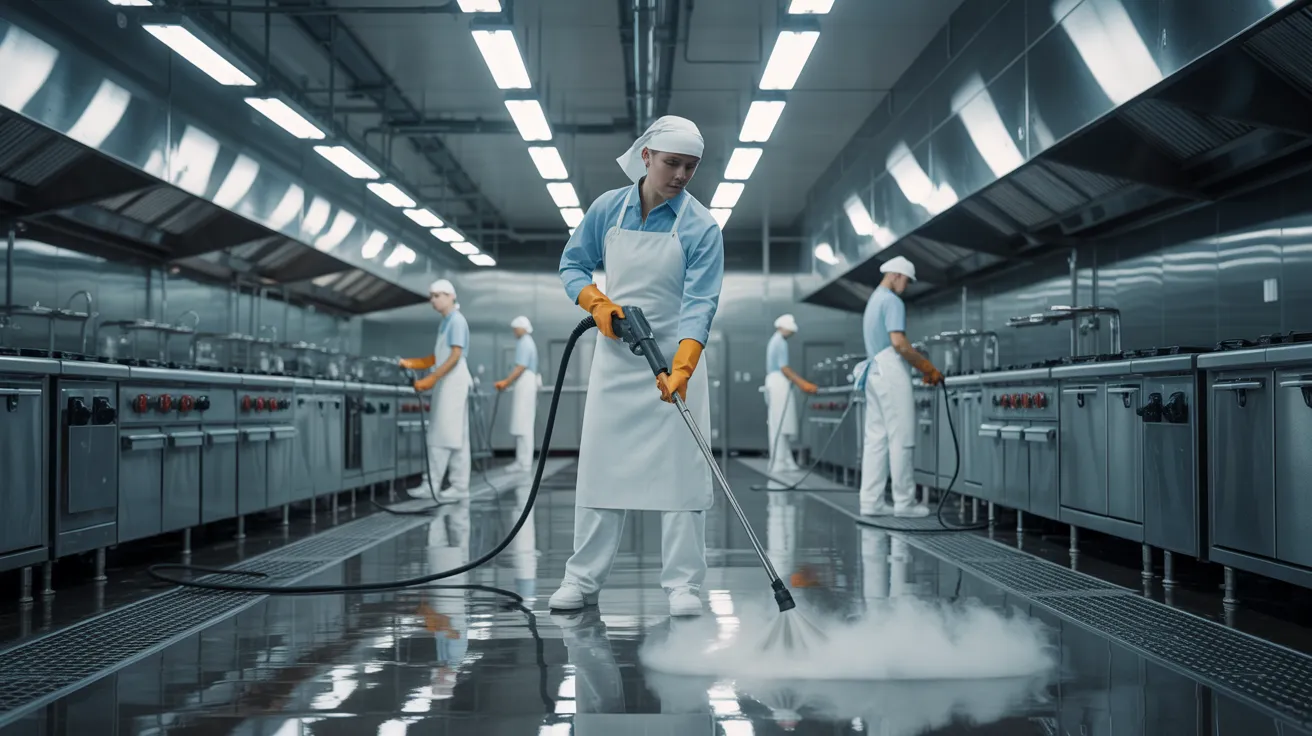
Brampton cleaning services focus on kitchens, floors, and restrooms as each zone involves different food safety, accident, and wellness risks. In industrial kitchens, you need degreasing on cook lines, equipment exteriors, drains, prep surfaces, and splash zones to reduce contamination and pest pressure.
Floor care that is documented should also be anticipated. Technicians clean and remove buildup from tile grout, ceramic surfaces, and vinyl floors, then apply appropriate drying controls so you can limit falls and maintain code-compliant conditions. They also handle entry points where dampness and dirt enter the building.
For restroom sanitation, cleaners sanitize high-touch surfaces, bathroom fixtures, stall dividers, supply dispensers, and trash receptacles, then refill items and eliminate smells. They also maintain restaurant cleaning supply rooms where product storage, sink cleanliness, and drain systems impact daily sanitation standards and worker protection.
How Food Safety Cleaning Benefits Brampton Operations
In Brampton, you must copyright food-safe cleaning standards to satisfy health code requirements and pass inspections. You also reduce cross-contamination by cleaning and sanitizing food-contact surfaces, equipment, and high-touch areas correctly. Most importantly, you help protect community wellness by reducing the chance of food poisoning in your establishment.
Regulatory Code Requirements
Food companies in Brampton face rigorous sanitary regulations, making food safety cleaning vital to meeting health code requirements, safeguarding patrons, and eliminating enforcement action. You must maintain hygienic food handling zones, written maintenance records, appropriate product handling, and auditable operational dive in standards that meet municipal and provincial inspection expectations.
Inspectors assess your operation to confirm that your cleaning program maintains safe storage, appliance cleanliness, refuse management, and bathroom upkeep.
Cross-Contamination Prevention
Following regulatory requirements depends on your ability to prevent cross-contamination in routine food work and sanitation. You should isolate raw items from prepared foods, sanitize prep surfaces between tasks, and maintain separation of cleaning products from food. Clear procedures reduce transfer risks and support consistent compliance during inspections.
Implementing allergen segregation helps ensure major allergens don't touch communal work zones, bins, or devices. Deploy dedicated cutting boards, color-coded tools, and strict utensil labeling so workers don't combine products during preparation or service. Enforce hand hygiene following raw meat, seafood, eggs, or allergen-containing products. Refresh cleaning cloths often, and verify sanitizer strength with test strips. When your team learns these guidelines every shift, you establish a more hygienic, safer workplace that satisfies Brampton's food safety needs regularly.
Public Health Protection
If food safety cleaning declines, you don't merely risk a failed inspection—you boost the probability of foodborne illness harming customers, staff, and the broader Brampton region. You also weaken your role in safeguarding community wellness, especially in busy food facilities where pathogens travel quickly through surfaces, equipment, and touchpoints.
You depend on cleaning procedures that eliminate contaminants, properly disinfect, and verify results. This entails adhering to exposure times, deploying approved disinfectants, maintaining records, and coaching staff to meet compliance standards. These actions support disease prevention by reducing microbes before contaminating food or hands. In Brampton, effective cleaning protects at-risk groups, curtails outbreak likelihood, and proves your diligence. When you adhere to proper protocols, you go beyond regulations—you substantially reduce risk and advance safer food handling across the region.
Why Is Cleaning Essential for Food Safety Compliance?
Maintaining comprehensive cleaning schedules strengthens food safety compliance by reducing contamination risks, preventing pathogen multiplication, and keeping your facility aligned with sanitation requirements under HACCP-based programs and public health regulations. You ensure that product-contact areas stay visibly clean and microbiologically controlled, facilitating documented preventive controls and inspection readiness.
Cleaning efforts additionally upgrade allergen prevention by eliminating residues that can cause undeclared allergen exposure.
What's the Right Time to Arrange Commercial Cleaning?
food contact surfaces, bathrooms, and high-contact areas
Schedule drain systems, vents, storage racks, and difficult-to-access zones every week or every month, based on inspection findings and sanitation records.
How Do You Choose Brampton Cleaning Experts?
Start by screening providers against food sanitation standards, not cost only. You should verify that each company understands CFIA, public health, and HACCP compliance standards relevant to your facility. Ask for insurance documentation, WHMIS compliance, documented staff training, and supervision practices. Review whether technicians understand cross-contamination risks, chemical handling, and traceable sanitation records.
Additionally, you need to evaluate service dependability and accountability. Obtain references from food facilities in Brampton, then review service speed, corrective measures, and communication practices. Verify the company supports supplier audits and can deliver compliance-ready records when inspectors or external parties need proof. Verify equipment is maintained, color-coded equipment are applied correctly, and site-specific hazards are identified. A capable service protects compliance, product integrity, and your reputation.
Which components are part of a hygiene cleaning program?
Create a documented plan that clarifies every sanitation task, standard, and responsibility before production begins. You should detail cleaning schedules, authorized chemicals, concentration levels, contact duration, implements, and validation techniques for each zone, surface, and piece of equipment. Include pre-operational inspections, corrective actions, and employee training requirements.
Your plan should also address cross-contamination controls, waste handling, pest-prevention measures, and documented schedules for rest areas, drains, flooring, and food-contact surfaces. Describe how you'll keep raw and ready-to-eat processes separate, facilitate ingredient tracking, and ensure accurate allergen labeling through validated cleaning between product changes. You should set accountability, keep signed records, and review results against regulatory standards, HACCP controls, and customer requirements. When gaps appear, update procedures immediately and retrain staff.
Popular Inquired Inquiries
Can cleaning services accommodate nighttime operations in Brampton facilities?
If you run controlled spaces, you'll also require documentation that enable audits and maintain assurance.
Can Brampton cleaning experts manage emergency spill response?
Yes, you can locate several Brampton cleaning professionals offering emergency response options. They manage hazardous materials, assess dangers, isolate zones, and execute rapid cleanup to reduce exposure and limit operational impact. You should confirm timeframes, certifications, protocols, and disposal methods. If your facility must meet standards, choose a service that logs events, follows procedures, and supports audits.
Do green disinfectants operate safely on food-contact surfaces?
In essence, green disinfectants function safely for food-contact surfaces provided you source items marked food-safe that comply with regulatory requirements. Validate application timing, dilution ratios, and rinse protocols in advance of use. Plant-derived products decrease harsh chemical exposure, although you need evidence of effectiveness against harmful bacteria. To preserve residue-free conditions, stick to precise manufacturer instructions and verify the disinfectant adheres to food sanitation requirements.
Can sanitation programs flex with seasonal shifts?
Certainly, cleaning schedules accommodate seasonal shifts successfully. Adjust intervals, staff levels, sanitizers, and validation steps to align with production rhythms while sustaining regulatory adherence. Reduce production downtime by timing cleaning during line changes, peak volumes, and equipment use patterns. Further update procedural documents, staff education, and environmental monitoring to account temporary risks, additional allergens, or higher contamination levels. Ongoing evaluations ensure the schedule effective.
Will professional cleaning services teach employees on sanitation best practices?
Absolutely, commercial cleaners frequently provide employee education on sanitation best practices. Your team gets training on proper chemical use, dwell times, cross-contamination prevention, machine takedown, and paperwork. They typically align instruction with HACCP, GMP, and CFIA or regional health authority standards. Many conduct health inspections to ensure adherence, identify gaps, and reinforce corrective actions. This helps you maintain consistent procedures, pass inspections, and lower contamination dangers routinely.
Conclusion
When you partner with Brampton commercial cleaning and food safety experts, you don't just tidy up—you maintain your facility inspection-ready and your protocols above board. From processing areas to kitchen spaces, every polished surface and well-kept corner helps reduce pest intrusion and avoid expensive problems. By scheduling service at the right intervals and following a clear cleaning plan, you protect staff, customers, and your reputation. In a tightly regulated environment, sanitary conditions aren't optional—they're fundamental to proper operations.